हैशटैग
#AcharyaUmaswamiJiMaharaj

Umaswati was born in Nyagrodhika village. His father was Svati and his mother was Uma. Umaswati was thus called as Svatitanaya after his father's name and as Vatsisuta after his mother's lineage. His name is a combination of the names of his parents. Umaswati is also known as Vacaka-sramana and Nagaravacaka. Digambara call him Umasvamin.
According to Vidyabhusana's book published in 1920, Umaswati died in 85 CE. More recent scholarship, such as by Padmanabh Jaini on the other hand, places him later, likely in the 2nd-century.Modern scholars such as Walter Slaje state that there are disagreements in dating Umaswati, and even whether Umaswati and Umaswami were two different persons, who lived sometime between 2nd- to 5th-century CE. Paul Dundas agrees that Tattvartha Sutra is among the oldest surviving Jaina philosophy text along with Bhagavati Sutra and the older Rsibhasitani, but dates Umaswati and the text to the 4th- to 5th-century.
No matching records found.
No matching records found.
आचार्य श्री उमास्वामी, जिन्हें उमास्वाति, उमास्वामिन्, वाचक उमास्वाति, नागरवाचक तथा गृद्धपिच्छाचार्य के नाम से भी जाना जाता है, जैन धर्म के इतिहास में एक अद्वितीय और सर्वोच्च स्थान रखते हैं। वे उन विरले आचार्यों में हैं जिन्हें दिगम्बर और श्वेताम्बर दोनों परम्पराएँ समान श्रद्धा और सम्मान से स्वीकार करती हैं। उनकी अमर कृति “तत्त्वार्थसूत्र” जैन धर्म का ऐसा दार्शनिक ग्रन्थ है जिसे सम्पूर्ण जैन समाज ने प्रमाणग्रन्थ के रूप में स्वीकार किया है। इस असाधारण उपलब्धि के कारण आचार्य उमास्वामी को जैन दर्शन का महान व्यवस्थितकर्ता, जैन सिद्धान्तों का सूत्रकार तथा प्राचीन भारत के श्रेष्ठतम दार्शनिकों में गिना जाता है। जैन परम्परा उन्हें ऐसे महामनीषी के रूप में स्मरण करती है जिन्होंने भगवान महावीर के उपदेशों को एक सुव्यवस्थित, संक्षिप्त और सर्वमान्य दार्शनिक स्वरूप प्रदान किया।
________________________________________
जन्म, परिवार और प्रारम्भिक जीवन
आचार्य उमास्वामी के जीवन के प्रारम्भिक विवरण पूर्णतः निश्चित रूप से उपलब्ध नहीं हैं। परम्परागत स्रोतों के अनुसार वे दक्षिण भारत के एक ब्राह्मण परिवार में जन्मे थे। कुछ विद्वानों तथा परम्पराओं के अनुसार उनके पिता का नाम स्वाति और माता का नाम उमा था। इन्हीं दोनों नामों के संयोग से उनका नाम “उमास्वाति” पड़ा। कुछ स्रोत उनका जन्मस्थान न्यग्रोधिका ग्राम बताते हैं। यद्यपि उनके जन्मकाल और जीवन के प्रारम्भिक विवरणों में मतभेद है, तथापि यह निर्विवाद है कि वे जैन धर्म के प्रारम्भिक युग के अत्यन्त प्रभावशाली आचार्य थे।
उनके जीवनकाल के विषय में भी विभिन्न मत मिलते हैं। दिगम्बर परम्परा उन्हें प्रथम शताब्दी ईस्वी के अन्त अथवा द्वितीय शताब्दी ईस्वी के प्रारम्भ का आचार्य मानती है। कुछ परम्पराएँ उनका निर्वाण 85 ईस्वी के आसपास मानती हैं, जबकि आधुनिक इतिहासकार और शोधकर्ता उनका काल दूसरी से पाँचवीं शताब्दी ईस्वी के मध्य निर्धारित करते हैं। तथापि यह निश्चित है कि वे समन्तभद्र, पूज्यपाद, अकलंकदेव और विद्यानन्द जैसे महान आचार्यों से पूर्व हुए थे।
________________________________________
आचार्य कुन्दकुन्द से सम्बन्ध
दिगम्बर परम्परा में यह दृढ़ विश्वास है कि आचार्य उमास्वामी महान दार्शनिक आचार्य कुन्दकुन्द की परम्परा से सम्बद्ध थे। श्रवणबेलगोला के अनेक शिलालेखों में उनका उल्लेख कुन्दकुन्दाचार्य की आध्यात्मिक परम्परा में किया गया है। इन शिलालेखों में कहा गया है कि कुन्दकुन्द की शिष्यपरम्परा में आचार्य उमास्वामी के समान समस्त पदार्थों का ज्ञाता कोई दूसरा विद्वान नहीं था। इसी आधार पर कई विद्वान उन्हें कुन्दकुन्दाचार्य का शिष्य भी मानते हैं, यद्यपि आधुनिक इतिहासकार इस विषय में निश्चित प्रमाण उपलब्ध न होने की बात स्वीकार करते हैं। फिर भी यह स्पष्ट है कि उमास्वामी और कुन्दकुन्द की परम्परा का सम्बन्ध जैन इतिहास में अत्यन्त महत्वपूर्ण माना जाता है।
________________________________________
“गृद्धपिच्छाचार्य” नाम की उत्पत्ति
आचार्य उमास्वामी का सर्वाधिक प्रसिद्ध उपनाम “गृद्धपिच्छाचार्य” है। जैन मुनि परम्परा में मयूरपिच्छी (मोरपंख से निर्मित पिच्छी) का उपयोग सूक्ष्म जीवों की रक्षा हेतु किया जाता है। परम्परा के अनुसार एक बार आचार्य उमास्वामी की मयूरपिच्छी खो गई। जीवों की रक्षा की भावना को बनाए रखने के लिए उन्होंने गिद्ध के पंखों से बनी पिच्छी धारण की। इसी कारण वे “गृद्धपिच्छाचार्य” कहलाए। यह नाम इतना लोकप्रिय हुआ कि वीरसेनाचार्य, विद्यानन्दाचार्य तथा अनेक मध्यकालीन विद्वानों ने अपने ग्रन्थों में उन्हें इसी नाम से स्मरण किया है। अनेक शिलालेख भी इस नाम की प्रसिद्धि की पुष्टि करते हैं।
________________________________________
आध्यात्मिक महिमा और व्यक्तित्व
जैन परम्पराओं में आचार्य उमास्वामी को अत्यन्त उच्च कोटि का योगी, ज्ञानी और ऋद्धिधारी आचार्य बताया गया है। उनके विषय में कहा जाता है कि वे अद्भुत आध्यात्मिक शक्तियों से सम्पन्न थे। कुछ परम्परागत वर्णनों में यह उल्लेख मिलता है कि उनके शरीर के स्पर्श मात्र से विष भी अमृत तुल्य हो जाता था तथा वे अपनी ऋद्धियों के प्रभाव से आकाश गमन कर सकते थे। चाहे इन कथाओं को ऐतिहासिक तथ्य माना जाए अथवा आध्यात्मिक प्रतीक, वे इस बात को अवश्य दर्शाती हैं कि आचार्य उमास्वामी का व्यक्तित्व अत्यन्त पूज्य और प्रभावशाली था। उनके अनेक शिष्य भी महान विद्वान और साधु थे, जिन्हें राजाओं तथा समाज से अत्यधिक सम्मान प्राप्त था।
________________________________________
तत्त्वार्थसूत्र की रचना – जीवन का महानतम कार्य
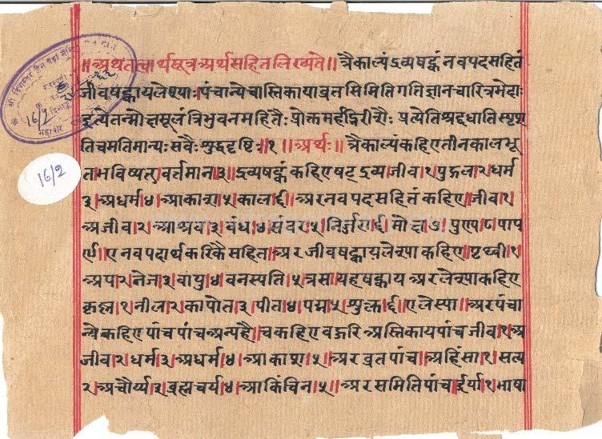
आचार्य उमास्वामी की सर्वश्रेष्ठ और अमर कृति “तत्त्वार्थसूत्र” है। इसे तत्त्वार्थाधिगमसूत्र, तत्त्वार्थशास्त्र, मोक्षशास्त्र तथा निःश्रेयसशास्त्र के नामों से भी जाना जाता है। यह जैन साहित्य का प्रथम संस्कृत सूत्रग्रन्थ माना जाता है। इससे पूर्व अधिकांश जैन साहित्य प्राकृत भाषा में रचा गया था। आचार्य उमास्वामी ने पहली बार सम्पूर्ण जैन दर्शन को संस्कृत भाषा में सूत्र शैली में प्रस्तुत किया। इस प्रकार उन्होंने जैन धर्म को व्यापक भारतीय दार्शनिक परम्परा से जोड़ा और संस्कृत जैन साहित्य की नींव रखी।
परम्परा में एक रोचक कथा मिलती है कि एक विद्वान द्रेपायक ने “दर्शन-ज्ञान-चारित्राणि मोक्षमार्गः” सूत्र लिखा था। जब आचार्य उमास्वामी ने उसे देखा तो उन्होंने उसमें “सम्यक्” शब्द जोड़ दिया। इस प्रकार प्रसिद्ध सूत्र बना—
“सम्यग्दर्शनज्ञानचारित्राणि मोक्षमार्गः”
अर्थात् सम्यक् दर्शन, सम्यक् ज्ञान और सम्यक् चरित्र ही मोक्ष का मार्ग हैं।
यही सूत्र सम्पूर्ण जैन साधना का आधार बन गया।
________________________________________
तत्त्वार्थसूत्र की संरचना
तत्त्वार्थसूत्र दस अध्यायों में विभाजित है और सम्पूर्ण जैन दर्शन का सार प्रस्तुत करता है।
प्रथम चार अध्यायों में जीव तत्त्व का विवेचन है। पाँचवें अध्याय में अजीव तत्त्व का वर्णन है। छठे और सातवें अध्याय में आस्रव अर्थात् कर्मों के प्रवाह का विश्लेषण है। आठवाँ अध्याय बन्ध अर्थात् कर्मबन्धन को समझाता है। नवाँ अध्याय संवर और निर्जरा का वर्णन करता है, जबकि दसवाँ अध्याय मोक्ष के स्वरूप को स्पष्ट करता है। इस प्रकार आचार्य उमास्वामी ने सम्पूर्ण जैन दर्शन को एक सुव्यवस्थित दार्शनिक ढाँचे में प्रस्तुत किया।
________________________________________
सप्त तत्त्वों का प्रतिपादन
आचार्य उमास्वामी ने जैन दर्शन के सात मूल तत्त्वों को स्पष्ट रूप से व्यवस्थित किया—
1. जीव
2. अजीव
3. आस्रव
4. बन्ध
5. संवर
6. निर्जरा
7. मोक्ष
इन सात तत्त्वों के माध्यम से उन्होंने यह बताया कि आत्मा किस प्रकार कर्मों से बँधती है और फिर आत्मशुद्धि के माध्यम से मोक्ष को प्राप्त करती है। यही सप्ततत्त्व आज भी जैन दर्शन की आधारशिला माने जाते हैं।
________________________________________
नैतिक दर्शन और मोक्षमार्ग
आचार्य उमास्वामी ने नैतिक जीवन को मोक्ष का अनिवार्य साधन माना। उन्होंने पाँच महाव्रतों—
• अहिंसा
• सत्य
• अस्तेय
• ब्रह्मचर्य
• अपरिग्रह
—को आत्मशुद्धि और मोक्ष के लिए आवश्यक बताया।
उनके अनुसार प्रत्येक जीव पवित्र है और सभी प्राणियों के प्रति करुणा, संयम और अहिंसा का व्यवहार करना चाहिए। उन्होंने तप, ध्यान, क्षमा, विनय, त्याग और आत्मसंयम को कर्मक्षय के प्रमुख साधन बताया। उनका सम्पूर्ण दर्शन इस सिद्धान्त पर आधारित है कि जीव अपने कर्मों के कारण संसार में भटकता है और आत्मशुद्धि द्वारा मोक्ष प्राप्त करता है।
________________________________________
तत्त्वार्थसूत्र पर टीकाएँ और प्रभाव
तत्त्वार्थसूत्र की महानता का प्रमाण यह है कि उसके ऊपर जैन इतिहास के लगभग सभी महान दार्शनिकों ने टीकाएँ लिखीं। प्रमुख टीकाकारों में—
• आचार्य समन्तभद्र
• आचार्य पूज्यपाद (सर्वार्थसिद्धि)
• आचार्य अकलंकदेव
• आचार्य विद्यानन्द
• आचार्य प्रभाचन्द्र
• आचार्य भास्करनन्दी
• आचार्य श्रुतसागर
विशेष रूप से उल्लेखनीय हैं।
इन टीकाओं ने तत्त्वार्थसूत्र को जैन दर्शन का सर्वोच्च प्रामाणिक ग्रन्थ बना दिया।
________________________________________
जैन धर्म में स्थान
तत्त्वार्थसूत्र का महत्व जैन धर्म में वैसा ही है जैसा हिन्दू धर्म में भगवद्गीता, इस्लाम में कुरआन और ईसाई धर्म में बाइबिल का है। यह एकमात्र ऐसा दार्शनिक ग्रन्थ है जिसे दिगम्बर, श्वेताम्बर, स्थानकवासी और तेरापंथी सभी परम्पराओं ने स्वीकार किया है। लगभग दो हजार वर्षों से यह जैन दर्शन, नैतिकता, अध्यात्म और मोक्षमार्ग का सबसे विश्वसनीय और प्रामाणिक ग्रन्थ माना जाता है।
________________________________________
विरासत और निष्कर्ष
आचार्य श्री उमास्वामी की विरासत सम्प्रदायों की सीमाओं से कहीं ऊपर है। उन्होंने जैन सिद्धान्तों को केवल संरक्षित ही नहीं किया, बल्कि उन्हें एक सुव्यवस्थित दार्शनिक प्रणाली के रूप में प्रस्तुत किया। उनकी अमर कृति तत्त्वार्थसूत्र ने जैन धर्म को वैचारिक दृढ़ता, दार्शनिक गहराई और सार्वभौमिक स्वीकृति प्रदान की।
वे केवल एक ग्रन्थकार नहीं थे, बल्कि जैन धर्म के महान सूत्रधार, आध्यात्मिक मार्गदर्शक और दर्शनशास्त्र के अनुपम आचार्य थे। लगभग दो सहस्राब्दियों बाद भी उनका नाम जैन समाज में उसी श्रद्धा से लिया जाता है, और उनकी शिक्षाएँ आज भी लाखों साधकों को सम्यक् दर्शन, सम्यक् ज्ञान और सम्यक् चरित्र के मार्ग पर अग्रसर कर रही हैं।
इस प्रकार आचार्य श्री उमास्वामी भारतीय दर्शन के इतिहास में एक ऐसे युगपुरुष के रूप में स्मरणीय हैं जिन्होंने भगवान महावीर की शिक्षाओं को कालजयी स्वरूप प्रदान किया और जैन धर्म को एक शाश्वत दार्शनिक आधार दिया। उनके द्वारा रचित तत्त्वार्थसूत्र सदैव जैन संस्कृति और आध्यात्मिकता का प्रकाशस्तम्भ बना रहेगा।
#AcharyaUmaswamiJiMaharaj
आचार्य श्री १०८ उमास्वातीजी/ उमास्वामीजी महाराज
No matching records found.
Umaswati was born in Nyagrodhika village. His father was Svati and his mother was Uma. Umaswati was thus called as Svatitanaya after his father's name and as Vatsisuta after his mother's lineage. His name is a combination of the names of his parents. Umaswati is also known as Vacaka-sramana and Nagaravacaka. Digambara call him Umasvamin.
According to Vidyabhusana's book published in 1920, Umaswati died in 85 CE. More recent scholarship, such as by Padmanabh Jaini on the other hand, places him later, likely in the 2nd-century.Modern scholars such as Walter Slaje state that there are disagreements in dating Umaswati, and even whether Umaswati and Umaswami were two different persons, who lived sometime between 2nd- to 5th-century CE. Paul Dundas agrees that Tattvartha Sutra is among the oldest surviving Jaina philosophy text along with Bhagavati Sutra and the older Rsibhasitani, but dates Umaswati and the text to the 4th- to 5th-century.
No matching records found.
Acharya Shri Umaswami, also known as Umasvati, Umasvamin, Vachaka Umasvati, Nagaravachaka, and Griddhapicchacharya, occupies a unique and unparalleled position in the history of Jainism. Among all Jain Acharyas, he is perhaps the only philosopher who is equally revered by both the Digambara and Śvetāmbara traditions. His immortal contribution to Jain philosophy is the composition of the Tattvartha Sutra (Tattvarthadhigama Sutra), a text accepted as authoritative by all major Jain traditions. Because of this extraordinary achievement, Acharya Umaswami is regarded as one of the greatest systematizers of Jain thought and one of the foremost philosophers of ancient India. Traditional Jain literature considers him a spiritual giant whose wisdom, scholarship, and saintliness helped preserve and organize the teachings of Lord Mahavira for future generations.
Historical Background and Birth
The precise details of Acharya Umaswami's birth and family background remain uncertain. Traditional Digambara sources state that he belonged to a South Indian Brahmin family. Some later traditions identify his father as Svati and his mother as Uma, from whose names the name “Umasvati” is believed to have been formed. Scholarly sources suggest that he may have been born in Nyagrodhika village. Although historical certainty is lacking, both traditional and modern sources agree that he lived during the early centuries of the Common Era. While some traditional accounts place him in the late first century CE and even suggest that he passed away around 85 CE, modern scholars generally place him between the second and fifth centuries CE. Despite these chronological debates, there is universal agreement that he lived before many of the great Jain commentators such as Samantabhadra, Pujyapada, Akalanka, and Vidyananda.
Connection with Acharya Kundakunda
According to Digambara tradition, Acharya Umaswami belonged to the spiritual lineage of the great Acharya Kundakunda. Several inscriptions from Shravanabelagola describe him as one of the most distinguished scholars in the Kundakunda tradition. These inscriptions state that among the disciples and followers of Kundakunda, no scholar equal to Umaswami existed in knowledge of all substances and realities. Some traditions therefore regard him as a direct disciple of Kundakunda, although modern historians note that definitive historical proof is unavailable. Nevertheless, the close association between Kundakunda’s philosophical heritage and Umaswami’s work remains an important feature of Digambara tradition.
Why He Was Called Griddhapicchacharya
One of the most fascinating traditions concerning Acharya Umaswami relates to his title “Griddhapicchacharya.” Jain monks traditionally carry a peacock-feather whisk known as a picchi, which is used to gently move living beings away without causing harm. According to tradition, Umaswami once lost his peacock-feather whisk. In order to continue protecting living beings and maintain the principle of non-violence, he began using feathers from a vulture (griddha). As a result, he became known as “Griddhapicchacharya,” meaning “the Acharya who carries a vulture-feather whisk.” This title became so famous that many later Acharyas, including Virasena and Vidyananda, referred to him primarily by this name. Numerous inscriptions and literary references confirm the popularity of this title throughout Jain history.
Spiritual Greatness and Traditional Accounts
Traditional Jain narratives describe Umaswami as a saint endowed with extraordinary spiritual powers (ṛddhis). Some accounts state that his mere touch could transform poison into nectar and that he possessed remarkable spiritual attainments. Whether understood literally or symbolically, these stories reflect the immense reverence with which he was regarded by later generations. Jain inscriptions also indicate that many highly accomplished Digambara monks and respected disciples were associated with his lineage. Such accounts portray him not merely as a philosopher but also as a highly revered spiritual master.
The Creation of the Tattvartha Sutra
The greatest achievement of Acharya Umaswami was undoubtedly the composition of the Tattvartha Sutra, also known as the Tattvarthadhigama Sutra, Tattvartha Shastra, Moksha Shastra, and Nihsreyasa Shastra. Before his time, most Jain literature had been composed in Prakrit languages. Umaswami became the first major Jain philosopher to systematically present the entire Jain doctrine in concise Sanskrit aphorisms. This was a revolutionary step in Jain intellectual history. His work opened the door for Jain philosophy to engage more directly with the broader Sanskrit philosophical tradition of India. Because of this contribution, he is often regarded as the founder of Sanskrit Jain philosophical literature.
Traditional accounts narrate an interesting story regarding the origin of the Tattvartha Sutra. It is said that a scholar named Drepayaka had written the phrase “Darshana-Jnana-Charitrani Moksha-Margah” on a board. When Umaswami saw it, he added the word “Samyak” (Right) before the three terms. Thus emerged the celebrated formula: “Samyag-Darshana-Jnana-Charitrani Moksha-Margah” — Right Faith, Right Knowledge, and Right Conduct constitute the path to liberation. This teaching became the foundational principle of Jain spiritual practice.
Structure and Contents of the Tattvartha Sutra
The Tattvartha Sutra is divided into ten chapters and presents a complete summary of Jain philosophy. The first four chapters discuss the nature of the soul (Jiva), while the fifth chapter explains non-soul substances (Ajiva). The sixth and seventh chapters discuss the inflow of karma (Asrava), the eighth chapter explains karmic bondage (Bandha), the ninth chapter deals with stopping and shedding karma (Samvara and Nirjara), and the tenth chapter explains liberation (Moksha). Through these ten chapters, Umaswami systematically organized the entire Jain worldview into a coherent philosophical system.
The Seven Fundamental Truths
One of Umaswami’s most important contributions was his clear presentation of the seven fundamental realities (Sapta Tattvas) of Jain philosophy: Jiva (soul), Ajiva (non-soul), Asrava (influx of karma), Bandha (bondage), Samvara (stoppage of karmic influx), Nirjara (shedding of karma), and Moksha (liberation). These seven categories became the framework through which later Jain thinkers understood the spiritual journey from bondage to liberation. His systematic treatment of these principles remains one of the greatest achievements in the history of Indian philosophy.
Ethics and Spiritual Practice
Acharya Umaswami emphasized the importance of ethical living as the foundation of liberation. He taught that the five vows—Ahimsa (non-violence), Satya (truthfulness), Asteya (non-stealing), Brahmacharya (celibacy or chastity), and Aparigraha (non-possessiveness)—are essential for preventing the accumulation of karmic matter. He also explained the importance of self-discipline, meditation, austerities, repentance, humility, and compassion toward all living beings. According to his philosophy, every living being is sacred, and liberation is achieved through purification of the soul from karmic bondage.
Commentaries and Influence
The authority of the Tattvartha Sutra is evident from the enormous number of commentaries written on it. Some of the most celebrated commentaries include:
• Sarvarthasiddhi by Acharya Pujyapada
• Tattvartha Vartika by Acharya Akalanka
• Tattvartha Shloka Vartika by Acharya Vidyananda
• Rajavartika by Acharya Prabhachandra
• Bhaskari Tika by Bhaskaranandi
• Shrutasagari Tika by Shrutasagara
These works expanded, defended, and clarified Umaswami’s teachings, ensuring that the Tattvartha Sutra remained the central philosophical text of Jainism for centuries.
Importance in Jainism
The Tattvartha Sutra holds a place in Jainism comparable to that of the Bhagavad Gita in Hinduism, the Quran in Islam, and the Bible in Christianity. It is the only Jain philosophical scripture accepted by all major Jain traditions. Its authority extends across Digambara, Śvetāmbara, Sthanakavasi, and Terapanthi communities. For nearly two millennia it has served as the standard introduction to Jain philosophy, ethics, cosmology, and spirituality.
Legacy
Acharya Shri Umaswami’s legacy transcends sectarian boundaries. He transformed Jain philosophy from a collection of scriptural teachings into a systematic and intellectually rigorous philosophical system. Through the Tattvartha Sutra, he preserved the essence of Lord Mahavira’s teachings in a concise and universally accessible form. His work influenced generations of Jain scholars and even attracted the attention of non-Jain philosophers. Today, nearly two thousand years after his lifetime, he remains one of the most respected figures in Indian philosophical history.
His life demonstrates the perfect union of scholarship, spirituality, discipline, compassion, and intellectual brilliance. For this reason, Acharya Shri Umaswami is remembered not merely as a great author but as one of the foremost architects of Jain philosophy and one of the greatest Acharyas in the entire Jain tradition. ∎
Sources used: Traditional Digambara literature, Shravanabelagola inscriptions, Jain historical narratives, Tattvartha-Sutra/Moksha Shastra references, and modern academic studies compiled from the material you provided.
#AcharyaUmaswamiJiMaharaj
You cannot copy content of this page